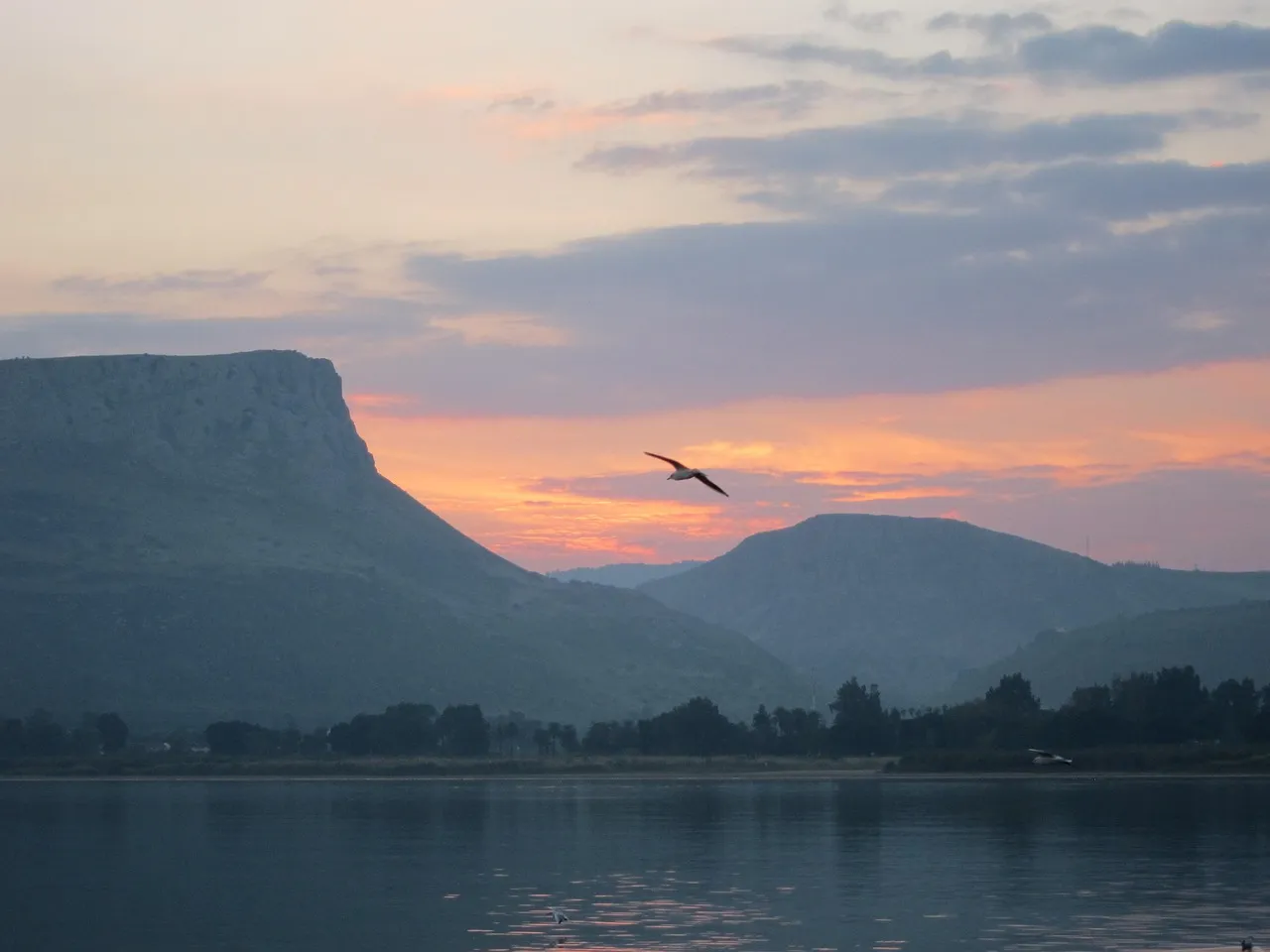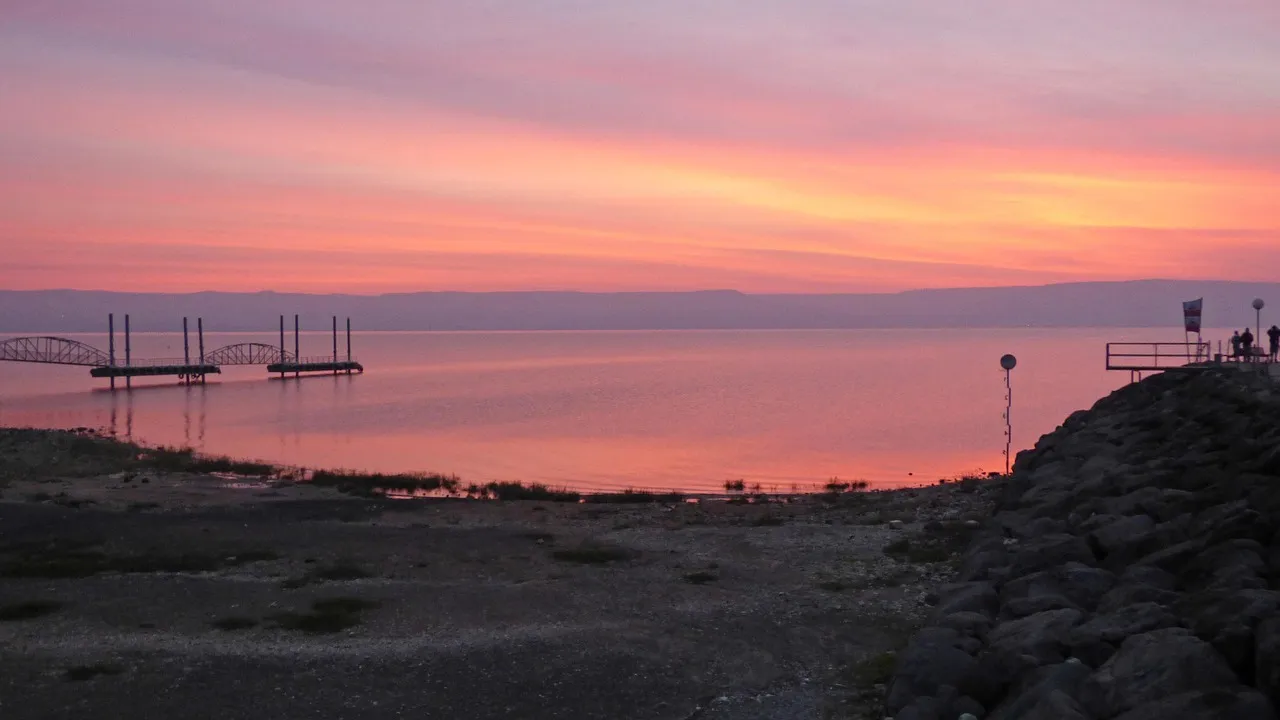
The Sea of Galilee is the center of Jesus’s Galilean ministry: the shore where He called His first disciples (Mark 1:16-20), the water He walked on (Matthew 14:22-33), and the place He returned to after the resurrection (John 21). For Christian pilgrimage groups, the northwest shore sites of Capernaum, Tabgha, and the Mount of Beatitudes, plus a boat ride on the lake and baptism at Yardenit on the Jordan, form a full day itinerary from a Tiberias base.
The Sea of Galilee pilgrim guide you’re reading now starts where every pilgrimage to this lake should start: at the water’s edge before the tour buses arrive.
Come at dawn if you can. The lake sits below sea level, ringed by dark hills that hold the night a little longer than the sky above them. When the light finally breaks over the Golan Heights to the east, it spreads across the water in long gold bars. The surface is usually still at that hour. Egrets work the shallow edges. Somewhere nearby, a fisherman is already out.
Stand there for five minutes without saying anything. You will understand why Jesus kept coming back here.
This is where He called four fishermen off a beach and they left their nets without apparent hesitation (Mark 1:16-20). This is where He slept through a storm so violent it terrified experienced sailors, then spoke to the wind and the water and they obeyed. This is the lake He walked across at three in the morning to reach His terrified disciples, and where Peter climbed out of the boat and walked toward Him until his nerve broke (Matthew 14:22-33). And this is the shore where, after the resurrection, He built a charcoal fire and cooked fish for the seven who had gone back to their boats because they didn’t know what else to do. Where He asked Simon Peter three times, “Do you love me?” . Once for each denial, most people think. And each time He gave him something to do with that love: “Feed my sheep” (John 21:15-17).
That conversation on the beach is one of the most quietly devastating things in the New Testament. Peter, who had sworn he would die for Jesus and then couldn’t hold it together in a courtyard when a servant girl recognized him, standing on the same kind of shore where he’d first been called, being asked the same question three times. And Jesus not rubbing his face in it. Just asking. Just giving him work to do.
The Sea of Galilee is where the whole thing started, and where it came back together.
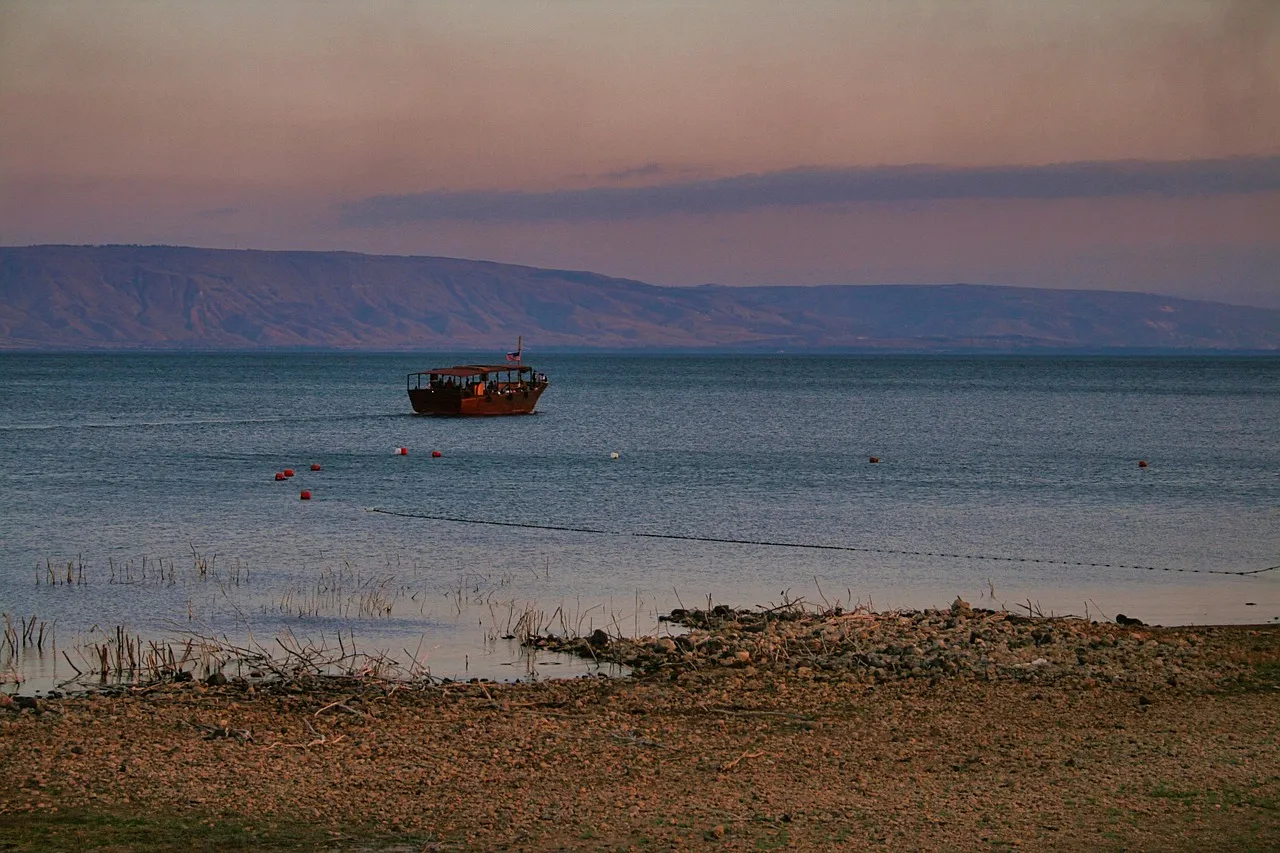
What you’ll see on the northwest shore
The northwest shore is where most of the Gospel action was concentrated, and where most pilgrimage groups spend their time. The three main sites here are close together and work well as a single morning.
Capernaum is Jesus’s Galilean base. Matthew 4:13 says He moved there from Nazareth and made it His home. The archaeology of Capernaum is among the most thoroughly documented in the Galilee, and the site rewards anyone who visits with a sense of what first-century village life on this lake actually looked like. The town was a customs station on a major trade route, which explains both its relative wealth and the mix of people Jesus encountered there: tax collectors, Roman soldiers, fishermen, traders. The ruins today include the foundations of first-century houses, a 4th-century synagogue built over the first-century one where Jesus taught (Luke 4:31-37), and what excavations since 1968 have identified as Peter’s house, now covered by a modern Franciscan church built on stilts above the ruins so visitors can look down through the floor at the stone walls below.
The synagogue is the center of the site. The white limestone structure above ground is Byzantine-era, but dark basalt foundations beneath it belong to the 1st century. The same floor Jesus walked. The acoustics in that space are strange. When it’s quiet, it stays quiet.
Tabgha sits about two kilometers down the shore toward Tiberias. The Church of the Multiplication of the Loaves and Fishes marks the traditional site of the feeding of five thousand (Mark 6:30-44), and the 5th-century mosaic floor inside is one of the most beautiful things in the Galilee. The design shows two fish flanking a basket of loaves, which has become one of the most recognized images in Christian iconography. The church is cool and dim. It’s a good place to stop and read the passage.
The Church of the Primacy of Peter, a few hundred meters further along the shore, is a small Franciscan chapel built over a flat basalt rock on the water’s edge. The rock, called Mensa Christi (Table of Christ), is the spot tradition associates with the post-resurrection breakfast of John 21. The church is bare inside, the floor worn smooth. A few steps lead down to the water. It’s one of those places where the smallness of the space, just a stone floor and the lake lapping at the rocks outside, makes the story feel immediate in a way that larger churches don’t.
Mount of Beatitudes
The hill above Tabgha, called the Mount of Beatitudes, is where Matthew’s Gospel places the Sermon on the Mount (Matthew 5-7). The site is managed by the Franciscans and has a round church built in the 1930s near the crest, with gardens on the slopes that look out over the lake toward the east. On a clear morning, you can see across the water to the cliffs of the Golan. The view is essentially what it was in the first century, minus the modern kibbutzim along the shore.
Groups often read the Beatitudes here. They were written for people who are poor, who grieve, who hunger, who are pushed around and overlooked. Reading them on the hillside above the lake, with the fishing boats visible far below, you feel the specificity of the original audience in a way you don’t always feel in a church back home.
What hits me every time is that Jesus wasn’t giving a general address. He was looking at the people in front of Him, on a hillside by a lake in an occupied province, and telling them something specific about where God was.
Out on the water
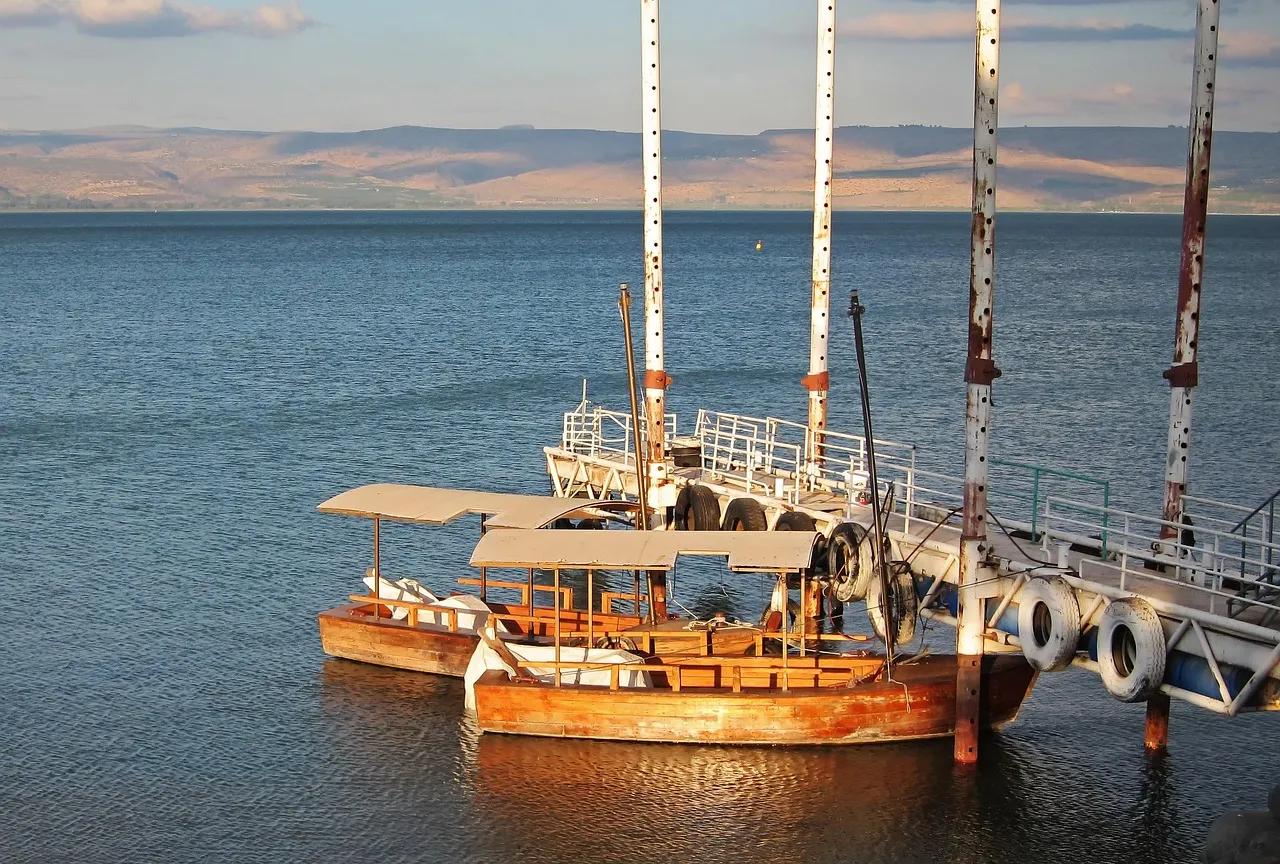
Most pilgrimage groups take a boat ride on the lake, and it’s worth doing. Wooden boats, styled after first-century fishing vessels, depart from Tiberias and from Kibbutz Ginosar throughout the morning. Most rides last 45 minutes to an hour.
A first-century boat was actually recovered from the mud near Kibbutz Ginosar in 1986, during a drought that lowered the lake level enough to expose it. The boat, carbon-dated to between 100 BCE and 70 CE, is now preserved in a museum at Ginosar. It’s 8.2 meters long, wide-beamed, the kind of vessel the disciples would have used for both fishing and transport. Seeing it in person recalibrates the scale of the storm stories. This is a small, open wooden boat on a lake that can whip up whitecaps in minutes when the wind comes through the mountain passes.
On the water, the hills around the lake become a full circle. You can see why this was a world unto itself. The Galilean ministry plays out on and around this body of water: storms, miraculous catches, night crossings, crowds on the shore, Jesus going alone up the hills to pray. The boat ride makes the geography of it physical in a way that standing on the shore doesn’t quite achieve.
Groups can request time for a worship set, a Scripture reading, or communion on the water. Many do. There’s something about saying the words of Psalm 107, the one about those who go down to the sea in ships and see God’s works in deep water, while sitting on the lake where those works happened.
Magdala
Magdala often gets skipped, and it shouldn’t. Mary Magdalene is from this town. Magdala means “tower” in Aramaic, and recent excavations that began in 2009 have uncovered a 1st-century synagogue that may be the most significant Galilean find of the last generation.
The synagogue stone, found inside the building, is carved with a 7-branched menorah, making it the oldest known carving of the Temple menorah outside Jerusalem. It predates the destruction of the Temple in 70 CE. The building itself is the best-preserved first-century synagogue in Israel. Jesus almost certainly prayed and taught here.
The site is now a retreat center run by the Legionaries of Christ. There’s a modern chapel built around the excavated synagogue floor, designed so visitors can sit above the ruins and look down into the 1st-century space. The effect is disorienting and worth sitting with.
Mary Magdalene is one of the figures most often reduced to what the Gospels don’t say about her rather than what they do. What they do say is that she followed Jesus from Galilee to Jerusalem, was present at the cross when most of the disciples had scattered, came to the tomb on the first morning, and was the first person the risen Jesus addressed by name. “Mary,” He said. She turned and recognized Him (John 20:16). Whatever else you believe about her, she got there first.
Yardenit: baptism and the Jordan
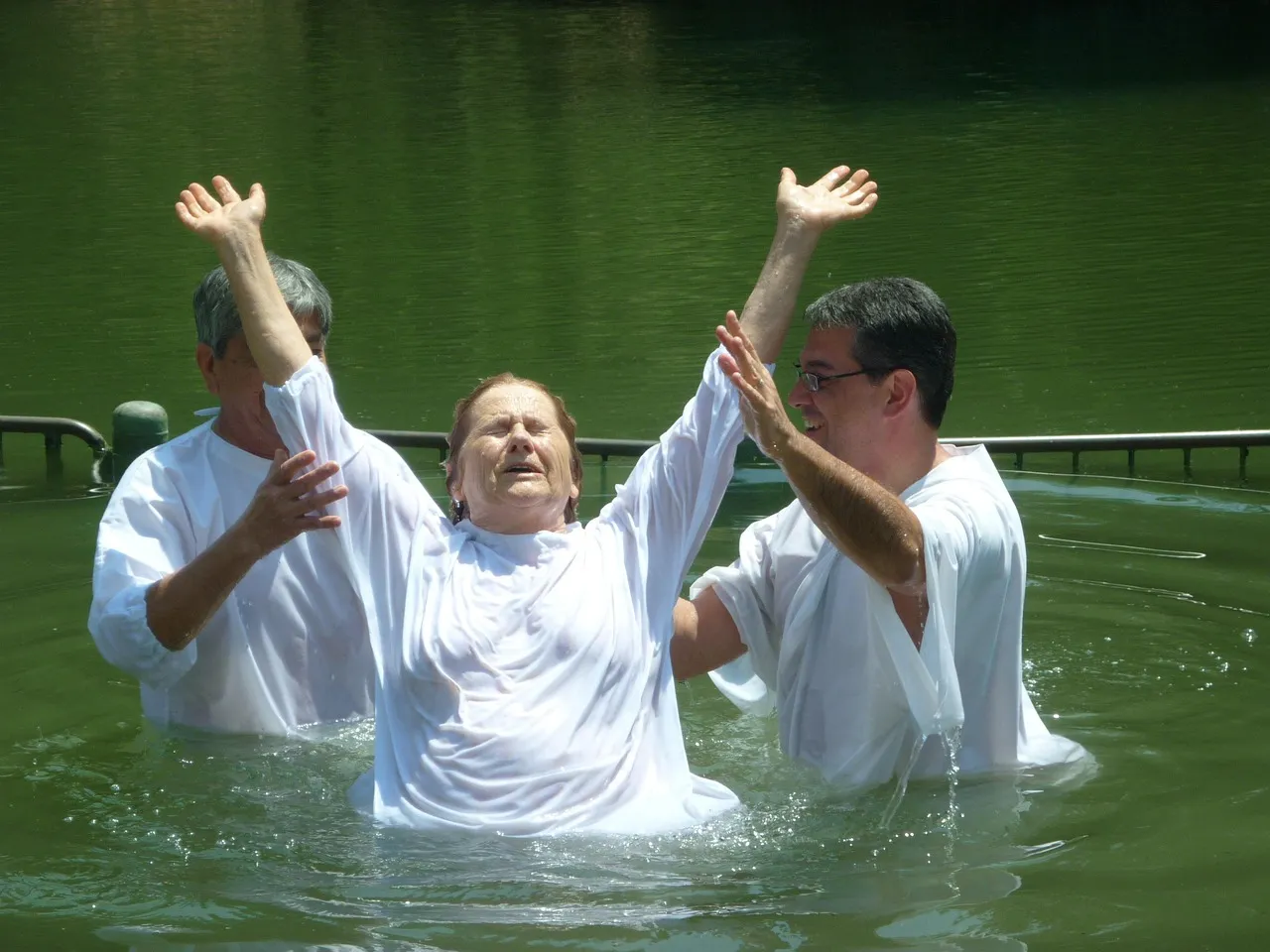
The Jordan River exits the south end of the Sea of Galilee at a point called Yardenit. This is the primary baptism site for Christian pilgrimage groups in northern Israel, and the Yardenit facility exists entirely for that purpose: changing rooms, white robes to rent, a wide, calm stretch of the river, a platform of steps leading down into the water. For a full practical guide to the ceremony itself, including what to say and how to prepare your group, see our Jordan River baptism guide.
The ceremony most groups do here is a renewal of baptismal vows rather than a first baptism, though both happen. The practice of standing in the Jordan and saying the words again, in the country where Jesus was baptized, is one of those rituals that can land differently depending on where you are in your life. For some people, it’s straightforward and joyful. For others it’s more like the Peter conversation on the beach: an accounting, and then a commission.
The passage most groups read is Matthew 3:13-17, John coming out of the water and the voice from heaven. But some groups read John 21 instead, the post-resurrection breakfast, and do the baptism renewal as a response to that conversation. “Do you love me?” “Yes.” “Then feed my sheep.” Walk into the water and come back up. It’s a reasonable way to close a week in Galilee.
Practical information for pilgrimage groups
The Sea of Galilee is the center of the Galilee region and most groups base out of Tiberias or one of the kibbutz hotels on the shore. The lake is about 21 kilometers long and 13 kilometers wide, so all the main sites are within 30 minutes of each other by road.
A full Galilee day typically covers Capernaum, Tabgha (Church of the Multiplication and Church of the Primacy), the boat ride from Ginosar, Magdala, and either the Mount of Beatitudes or Yardenit for baptism, sometimes both. It’s a full day. Groups that try to add Nazareth or Mount Tabor to the same itinerary almost always feel rushed. Better to let the lake breathe. Our Walk Where Jesus Walked 10-day tour devotes three full days to the Sea of Galilee and its surrounding sites, sequenced as the Gospels record them.
The northwest shore sites (Capernaum, Tabgha, the Mount of Beatitudes) are busiest between 9 a.m. and noon. Arriving before 8 a.m. at the Peter chapel or the Tabgha shore gives you the water and the silence before the groups arrive. It’s worth setting the alarm.
March through May is the best season for Galilee: mild weather, green hills, the wildflowers that grow along the shore. October and November are also excellent. Summer is hot, the lake sitting in a basin below sea level, and the midday heat between July and September is genuine. Easter week is crowded but carries a weight that off-season visits don’t, and many pilgrimage leaders plan the schedule so Good Friday falls in Jerusalem and the resurrection morning is spent here, at the lake, reading John 21 in the morning light.
There’s a logic to that. This is where the disciples came after the resurrection because they didn’t know what else to do. And this is where Jesus found them.